During the planning of a wedding, the couple has a lot of choices to make, and not just about what color they want the tablecloths at the reception. How do you want your ceremony to go? Will you use a minister? Practice handfasting? Jump the broom? Throw rice? These are all traditions represented still in modern weddings, even handfasting, literally tying the knot, and jumping the broom. These last two are among many ancient wedding rites coming back into practice today in order to make the ceremony more unique or to bring the couple closer.
So, what will we do? We decided a while ago that our wedding will be small. This will mean we won't get to invite absolutely everyone we know. My fiance has a big family, and I have a fairly large circle of friends, so we have some more choices ahead of us.
My fiance has been great with wedding planning so far. He and I tend to have very similar taste when it comes to style, so we haven't run into any disagreements, and our communication has been open.
We don't oppose tradition, but there are some traditions we will be doing without. I mentioned the size of our wedding so this next statement isn't so strange. We aren't going to have a wedding procession. Right now, it's just us. The bride and groom, and whoever we choose to officiate the ceremony. So, my husband-to-be will go up to the front, music will play, the guests will settle, I will walk up the aisle, the officiant will welcome everyone, and the ceremony will proceed. In my mind, it's simple, flows well, and suits us. But, it's leaving some things out. I tried to mention it casually, so let me bring it to the forefront for emphasis now. I will be walking up the aisle by myself.
I love my parents very much, and I would never do anything to hurt them. But the thought of being "given away," hearkening back to a tradition of women being treated like chattel, unsettles me.
While this tradition has become something deeply sentimental in modern weddings, it still rubs me the wrong way. And since it is usually a part of modern weddings, it can make talking to people about leaving out this detail a little difficult.
It's not that I'm not sentimental. I'm a wedding photographer! Most people don't see it because I make myself blend into the background to do my job, but I cry at weddings. When couples say their vows, the people sitting down don't always get to hear what the couple says, but I do. And it's rare that I witness a ceremony in which my eyes don't at least well up a little. In fact, my wedding will probably be no different. I will try my hardest to remain composed, but I will also use as much make-up primer and finishing spray as I can get my hands on, because most likely I will cry.
However, just because something is sweet or done in a loving capacity doesn't mean it doesn't come from a longstanding tradition that represents an awful facet of society, such as women being treated as property. I've been doing some research to see how people get around this because, well, as nice as the moment is whenever the officiant asks, "Who gives this bride in marriage?" it's essentially just flowery verbiage for a sales transaction.
Since we live in modern times, tradition isn't necessarily at the forefront of all weddings as it used to be, and gender roles are happily being cast aside in light of social equality. But, I still can't find an example of when a groom's parents have stood up and given him away. They might escort him down the aisle in the processional, but nobody gives a man away. It just doesn't happen, and I find that striking.
Honoring my family is extremely important to me. I love them so much, and through marrying my fiance, I will be incorporating his family into my life too, so I'll have even more people to love. And I'm thrilled! My fiance and I are the people we are because of our parents. I'm more grateful for that than I can say. And I have also been extremely humbled recently, because my parents have given us a substantial financial gift for our wedding.
Because honoring our parents is important to us, we are going to have something in the ceremony that will incorporate each of them. It's still almost a year away, so this may change, but I think having a candle-lighting ceremony would be lovely. My mom, my dad, his mom, and his dad would all go up and light one candle, symbolically lighting the way for our future together.
12 November 2013

06 November 2013
NaNoWriM--Oh No
Well, it's day six of National Novel Writing Month, and I'm four days behind. Instead of making excuses I'm forging ahead. I don't know if this writing month will only be about the novel for me though. I hadn't written in a long while until just a few days ago, and things are starting to loosen that need to be let out. I need to write some poems I think, or at least just the one that's been tumbling around up in my brain. And I need to journal, desperately.
I'm shooting for the 50,000 word count to be a "winner" at the end of the month, but my long work is not the only thing I'll be working on. I was not prepared for this month in any way, shape, or form--and not just when it comes to writing. The past month and a half of my life has been topsy-turvy, to put it nicely.
It all started when I fell down my stairs. Well, it started much before that I suppose, but this was the catalyst. When I slipped and fell down the stairs, which were fortunately plushly carpeted, I bent and bruised my tailbone. Because I was unable to sit up or do much of anything, I could not work. At my job, I was on the last step of disciplinary action for absences (because I worked for big, corporate doo-doo heads). So, whenever I was able to come back, I would be subject to termination. I decided to use of the rest of my paid time-off and after the very last paid moment passed, I resigned. I'm hoping it will look better for me to have resigned my position rather than having been forcefully terminated for absenteeism.
Quick side note.
Here's what made up my disciplinary points over the course of six months: half day because I was throwing up, full day because I was throwing up, full day because of allergic reaction, half day because of throwing up, half day because of anxiety attack AT work, and a missed punch. Yes, a missed punch on the time clock has the same weight has half a day of absence. All this, followed by my butt-bruising, would culminate in me being let go.
I've forgotten to mention until now that the day I fell was a Monday. On the Friday of this particular week, my fiance and I had planned on moving in together.
So, I fell down the stairs, nearly breaking my tailbone and rendering myself absolutely bedridden for five weeks, losing my job, having to cancel plans of moving in with my fiance (which affected him and his family in an alarming number of ways, which thankfully have mostly been mended), my dog became unwell, I got sick, she got better, I got better, and then she got much, much worse. We, my parents and I, made the decision to put the dog down. We raised her for eight and a half years, from when she was a very small puppy. I can't begin to describe how hard this has been on all of us.
I read Memoirs of a Geisha for the first time today. In it, I found a quote about grief I found poignant. "Grief is a most peculiar thing; we're so helpless in the face of it. It's like a window that will simply open of its own accord. The room grows cold, and we can do nothing but shiver. But it opens a little less each time, and a little less; and one day we wonder what has become of it." None of us has found that day, I don't think, so we still pull a blanket over our shoulders and try to keep the window closed.
Shortly before my dog became so ill, a close friend of mine suffered an immense trauma. I had to balance how I dealt with everything in my life before I could think of helping them. I still have to, and it's a constant tightrope walk. Clinical depression and generalized anxiety disorder have a way of bringing the world crashing down even when it's not. But when the world is a little wobbly to begin with, well, those little storm clouds don't exactly help things much.
In this span of time, my mother's health has declined. We are relieved to have a diagnosis and are proceeding as cheerfully as possible with trying to help her get her diet in order to get this thing licked. It's a tall order. With as much as I've been through in these past few weeks, she has had an infinitely harder fight. I can't help but marvel at her strength, even though I know she does not feel strong in any way.
*EDIT* My mom is okay! I've had a lot asking after her her well-being after I posted this, and I can assure you she really will be okay. She's had some major digestive issues, has undergone a lot of testing, and now we're learning how to help manage her diet to reduce discomfort and to get keep her healthy.
I am sick, again, but I am mending. I'm going to persevere and keep writing--in my journal. It may be pieces of my long work, a poem, about a particularly disturbing dream I had, or just thoughts that need to be laid out and put to rest, but it will be something. 50,000 words at least by the end of November. And I will continue journaling beyond that into the months to come.
Thank you for bearing with me through all this.
I'm shooting for the 50,000 word count to be a "winner" at the end of the month, but my long work is not the only thing I'll be working on. I was not prepared for this month in any way, shape, or form--and not just when it comes to writing. The past month and a half of my life has been topsy-turvy, to put it nicely.
It all started when I fell down my stairs. Well, it started much before that I suppose, but this was the catalyst. When I slipped and fell down the stairs, which were fortunately plushly carpeted, I bent and bruised my tailbone. Because I was unable to sit up or do much of anything, I could not work. At my job, I was on the last step of disciplinary action for absences (because I worked for big, corporate doo-doo heads). So, whenever I was able to come back, I would be subject to termination. I decided to use of the rest of my paid time-off and after the very last paid moment passed, I resigned. I'm hoping it will look better for me to have resigned my position rather than having been forcefully terminated for absenteeism.
Quick side note.
Here's what made up my disciplinary points over the course of six months: half day because I was throwing up, full day because I was throwing up, full day because of allergic reaction, half day because of throwing up, half day because of anxiety attack AT work, and a missed punch. Yes, a missed punch on the time clock has the same weight has half a day of absence. All this, followed by my butt-bruising, would culminate in me being let go.
I've forgotten to mention until now that the day I fell was a Monday. On the Friday of this particular week, my fiance and I had planned on moving in together.
So, I fell down the stairs, nearly breaking my tailbone and rendering myself absolutely bedridden for five weeks, losing my job, having to cancel plans of moving in with my fiance (which affected him and his family in an alarming number of ways, which thankfully have mostly been mended), my dog became unwell, I got sick, she got better, I got better, and then she got much, much worse. We, my parents and I, made the decision to put the dog down. We raised her for eight and a half years, from when she was a very small puppy. I can't begin to describe how hard this has been on all of us.
I read Memoirs of a Geisha for the first time today. In it, I found a quote about grief I found poignant. "Grief is a most peculiar thing; we're so helpless in the face of it. It's like a window that will simply open of its own accord. The room grows cold, and we can do nothing but shiver. But it opens a little less each time, and a little less; and one day we wonder what has become of it." None of us has found that day, I don't think, so we still pull a blanket over our shoulders and try to keep the window closed.
Shortly before my dog became so ill, a close friend of mine suffered an immense trauma. I had to balance how I dealt with everything in my life before I could think of helping them. I still have to, and it's a constant tightrope walk. Clinical depression and generalized anxiety disorder have a way of bringing the world crashing down even when it's not. But when the world is a little wobbly to begin with, well, those little storm clouds don't exactly help things much.
In this span of time, my mother's health has declined. We are relieved to have a diagnosis and are proceeding as cheerfully as possible with trying to help her get her diet in order to get this thing licked. It's a tall order. With as much as I've been through in these past few weeks, she has had an infinitely harder fight. I can't help but marvel at her strength, even though I know she does not feel strong in any way.
*EDIT* My mom is okay! I've had a lot asking after her her well-being after I posted this, and I can assure you she really will be okay. She's had some major digestive issues, has undergone a lot of testing, and now we're learning how to help manage her diet to reduce discomfort and to get keep her healthy.
I am sick, again, but I am mending. I'm going to persevere and keep writing--in my journal. It may be pieces of my long work, a poem, about a particularly disturbing dream I had, or just thoughts that need to be laid out and put to rest, but it will be something. 50,000 words at least by the end of November. And I will continue journaling beyond that into the months to come.
Thank you for bearing with me through all this.
21 February 2013
Excuses
Excuses are all I have to offer for this post, really. Since the new year dawned, I've been writing less than usual. I finally started a short story I've had rolling around my head for about a year and got 1,700 words to it, but I haven't picked it up since that first burst of creativity. I was just complaining to my writing group that most of my inspiration seems to strike me at awfully inconvenient times, most often when I'm driving down the highway on the way home from work, with no way to record the images attempting to sear my brain and prod me into action. I promise myself I'll write what I can remember of it when I get home, but other things inevitably come first--cooking food, eating food, etc. It seems I'm rarely inspired when I'm at home or anywhere near paper or pen or computer in general.
Aside from that one unfinished short story, I have the first draft of a very short poem I wrote today. I'm really rather fond of it because it began from one of those stark images that impressed itself upon me. Fortunately, I was in a place to set to writing immediately when that happened.
I have another image in my brain still half floating around, a ghost of what it was when it first appeared, as I was driving down Highway 169. Perhaps it's fitting. I think it was supposed to be about things lost, things forgotten, fog, mist, the past.
Aside from that one unfinished short story, I have the first draft of a very short poem I wrote today. I'm really rather fond of it because it began from one of those stark images that impressed itself upon me. Fortunately, I was in a place to set to writing immediately when that happened.
I have another image in my brain still half floating around, a ghost of what it was when it first appeared, as I was driving down Highway 169. Perhaps it's fitting. I think it was supposed to be about things lost, things forgotten, fog, mist, the past.
29 December 2012
It's About That Time
With the end of 2012 comes the summation of my reading for the year. Unlike in years past, this year I will pick out my top five favorites from my recommended books and even try to deem one as "best." Some of these books (most, in fact) were new to me, but some were re-reads. I think I may borrow the tradition of some of my friends and re-read LOTR every year. There are just so many books out there to read--we'll see. The books with asterisks are recommended for everyone in general. Anyone who has read Christopher Moore needs to read all he's written. He's my favorite authorial find this year. Absurd, hilarious magical realism. A Dirty Job, Lamb, and Fluke are my all-time favorites. Also, this list is subject to change because it's possible I may finish any of the four books I'm reading right now before January 1st.
Without further ado, here are the books I read in 2012.
1. Flight - Sherman Alexie*
2. Sula - Toni Morrison*
3. The Absolutely True Diary of a Part-Time Indian - Sherman Alexie*
4. The Unbearable Lightness of Being - Milan Kundera
5. The Ultimate Hitchhiker's Guide to the Galaxy - Douglas Adams*
6. The Truth About Stories - Thomas King
7. A Portrait of the Artist As a Young Man - James Joyce*
8. A Midsummer Night's Dream - Shakespeare*
9. Much Ado About Nothing - Shakespeare*
10. Tracks - Louise Erdrich*
11. A Wrinkle in Time - Madeline L'Engle*
12. Solar Storms - Linda Hogan*
13. A Game of Thrones - George R.R. Martin*
14. Ceremony - Leslie Marmon Silko
15. Lament for a Son - Nicholas Wolterstorff
16. Odd and the Frost Giants - Neil Gaiman
17. M is for Magic - Neil Gaiman*
18. Miss Peregrine's Home for Peculiar Children - Ransom Riggs*
19. Castle in the Air - Dianna Wynne Jones*
20. Out of Oz - Gregory Maguire*
21. The Fellowship of the Ring - J.R.R. Tolkien*
22. The Two Towers - J.R.R. Tolkien*
23. The Return of the King - J.R.R. Tolkien*
24. The Hobbit - J.R.R. Tolkien*
25. Good Omens - Terry Pratchett and Neil Gaiman*
26. The Sandman: A Game of You - Neil Gaiman*
27. The Color of Magic - Terry Pratchett*
28. A Clockwork Orange - Anthony Burgess*
29. A Clash of Kings - George R.R. Martin*
30. The Princess Bride - William Goldman
31. The Once and Future King - T.H. White
32. Practical Magic - Alice Hoffman*
33. Ender's Game - Orson Scott Card*
34. The Cider House Rules - John Irving*
35. The Good Earth - Pearl S. Buck
36. The Perks of Being a Wallflower - Stephen Chbosky*
37. Anansi Boys - Neil Gaiman*
38. The Wind in the Willows - Kenneth Grahame
39. Dress Your Family in Corduroy and Denim - David Sedaris*
40. The Alchemist - Paolo Coelho*
41. Interview With the Vampire - Anne Rice*
42. The Three Musketeers - Alexandre Dumas
43. Poetry 180 - ed. Billy Collins*
44. House of Many Ways - Dianna Wynne Jones*
45. Holidays on Ice - David Sedaris*
46. One Hundred Years of Solitude - Gabriel Garcia Marquez*
47. Practical Demonkeeping - Christopher Moore
48. Bloodsucking Fiends - Christopher Moore
49. Book of Shadows - Cate Tiernan
50. The Coven - Cate Tiernan
51. The Handmaid's Tale - Margaret Atwood*
52. You Suck - Christopher Moore
53. Brave New World - Aldous Huxley
54. Bite Me - Christopher Moore
55. The Poisonwood Bible - Barbara Kingsolver*
56. The Hotel New Hampshire - John Irving*
57. Have Spacesuit--Will Travel - Robert A. Heinlein
58. Fluke - Christopher Moore*
59. Picnic, Lightning - Billy Collins*
60. Possession - A.S. Byatt*
61. The Life of Pi - Yann Martel
62. Little Women - Louisa May Alcott*
63. Island of the Sequined Love Nun - Christopher Moore
64. The Tales of Beedle the Bard - J.K. Rowling
65. The Stupidest Angel - Christopher Moore*
66. The Silmarillion - J.R.R. Tolkien*
67. The Lust Lizard of Melancholy Cove - Christopher Moore*
68. The Dispossessed - Ursula Le Guin*
69. Diary - Chuck Palahniuk*
70. America Again: Rebecoming the Greatness We Never Weren't - Stephen Colbert*
71. On the Road - Jack Kerouac*
My top five favorites, in order of descending greatness.
1. The Dispossessed - Ursula Le Guin
2. A Handmaid's Tale - Margaret Atwood
3. The Poisonwood Bible - Barbara Kingsolver
4. One Hundred Years of Solitude - Gabriel Garcia Marquez
5. Possession - A.S. Byatt
I read many great books this year, but these five were absolutely life-changing for me. I was affected seriously by each one and wish that everyone who reads this will read each of these books at some point in their lives.
Without further ado, here are the books I read in 2012.
1. Flight - Sherman Alexie*
2. Sula - Toni Morrison*
3. The Absolutely True Diary of a Part-Time Indian - Sherman Alexie*
4. The Unbearable Lightness of Being - Milan Kundera
5. The Ultimate Hitchhiker's Guide to the Galaxy - Douglas Adams*
6. The Truth About Stories - Thomas King
7. A Portrait of the Artist As a Young Man - James Joyce*
8. A Midsummer Night's Dream - Shakespeare*
9. Much Ado About Nothing - Shakespeare*
10. Tracks - Louise Erdrich*
11. A Wrinkle in Time - Madeline L'Engle*
12. Solar Storms - Linda Hogan*
13. A Game of Thrones - George R.R. Martin*
14. Ceremony - Leslie Marmon Silko
15. Lament for a Son - Nicholas Wolterstorff
16. Odd and the Frost Giants - Neil Gaiman
17. M is for Magic - Neil Gaiman*
18. Miss Peregrine's Home for Peculiar Children - Ransom Riggs*
19. Castle in the Air - Dianna Wynne Jones*
20. Out of Oz - Gregory Maguire*
21. The Fellowship of the Ring - J.R.R. Tolkien*
22. The Two Towers - J.R.R. Tolkien*
23. The Return of the King - J.R.R. Tolkien*
24. The Hobbit - J.R.R. Tolkien*
25. Good Omens - Terry Pratchett and Neil Gaiman*
26. The Sandman: A Game of You - Neil Gaiman*
27. The Color of Magic - Terry Pratchett*
28. A Clockwork Orange - Anthony Burgess*
29. A Clash of Kings - George R.R. Martin*
30. The Princess Bride - William Goldman
31. The Once and Future King - T.H. White
32. Practical Magic - Alice Hoffman*
33. Ender's Game - Orson Scott Card*
34. The Cider House Rules - John Irving*
35. The Good Earth - Pearl S. Buck
36. The Perks of Being a Wallflower - Stephen Chbosky*
37. Anansi Boys - Neil Gaiman*
38. The Wind in the Willows - Kenneth Grahame
39. Dress Your Family in Corduroy and Denim - David Sedaris*
40. The Alchemist - Paolo Coelho*
41. Interview With the Vampire - Anne Rice*
42. The Three Musketeers - Alexandre Dumas
43. Poetry 180 - ed. Billy Collins*
44. House of Many Ways - Dianna Wynne Jones*
45. Holidays on Ice - David Sedaris*
46. One Hundred Years of Solitude - Gabriel Garcia Marquez*
47. Practical Demonkeeping - Christopher Moore
48. Bloodsucking Fiends - Christopher Moore
49. Book of Shadows - Cate Tiernan
50. The Coven - Cate Tiernan
51. The Handmaid's Tale - Margaret Atwood*
52. You Suck - Christopher Moore
53. Brave New World - Aldous Huxley
54. Bite Me - Christopher Moore
55. The Poisonwood Bible - Barbara Kingsolver*
56. The Hotel New Hampshire - John Irving*
57. Have Spacesuit--Will Travel - Robert A. Heinlein
58. Fluke - Christopher Moore*
59. Picnic, Lightning - Billy Collins*
60. Possession - A.S. Byatt*
61. The Life of Pi - Yann Martel
62. Little Women - Louisa May Alcott*
63. Island of the Sequined Love Nun - Christopher Moore
64. The Tales of Beedle the Bard - J.K. Rowling
65. The Stupidest Angel - Christopher Moore*
66. The Silmarillion - J.R.R. Tolkien*
67. The Lust Lizard of Melancholy Cove - Christopher Moore*
68. The Dispossessed - Ursula Le Guin*
69. Diary - Chuck Palahniuk*
70. America Again: Rebecoming the Greatness We Never Weren't - Stephen Colbert*
71. On the Road - Jack Kerouac*
My top five favorites, in order of descending greatness.
1. The Dispossessed - Ursula Le Guin
2. A Handmaid's Tale - Margaret Atwood
3. The Poisonwood Bible - Barbara Kingsolver
4. One Hundred Years of Solitude - Gabriel Garcia Marquez
5. Possession - A.S. Byatt
I read many great books this year, but these five were absolutely life-changing for me. I was affected seriously by each one and wish that everyone who reads this will read each of these books at some point in their lives.
19 December 2012
To Self-Publish or Not to Self-Publish?
Am I terribly old hat because that question terrifies me? Something tells me I'm not alone. I know self-publishing is no longer a last resort, a grudging alternative to "traditional routes," but something in me bristles at the notion of my actually doing it.
I'm currently compiling a manuscript of poetry. I thought with the wealth of poems I've managed to produce over the past several years that it might not be that hard. I was sadly wrong. As daunting as just putting things together to produce a cohesive piece and polishing it all up is, publishing is so much more terrifying.
I tell myself that I can continue to submit to contests--single pieces, three poems, or even a chapbook or whole collection--and that once I'm comfortable I can submit a finished MS to "reputable" publishers. My mind flags them as reputable, even though I know the literary journals and other places I've been submitting are just as reputable in reality. Perhaps what my brain means is "prolific." Then I can start my slog up the literary ladder until I have a chance to spin that magic fame and fortune wheel.
As I sit back and ponder this line of thinking, I realize I've had it since I was in third grade, when I first decided I wanted to be a writer. But where do I go from here?
I felt a similar panic when I was confronted with the concept of literary agents a couple years ago. The idea of marketing my product was something which simply had not occurred to me. Doesn't the publisher do that? The inner workings of the literary world sometimes seem as complex as the worlds the books they publish reveal to readers. I hope this anxiety at the concept of self-publishing is a rapidly passing one. It seems that more and more people are open to the idea of it, but the practical aspects of it are still a mystery to me. A simple Google search yields an incredible amount of information regarding self-publishing: articles, blog posts, reviews of self-published books, books about self-publishing, self-published books about self-publishing.
It seems like I've reached the end of this post and don't have much in the way of resolution. Rather than pontificating further, here's a quote regarding the nature of poetry from Charles Simic, taken from the Poets Laureate Anthology:
I remember once--I was teaching in the schools in
El Paso, Texas. And a student had asked . . . me
what poetry was good for. And I was stunned,
because it's such a serious question. It's a difficult
question. And suddenly a hand went up. It was a
young woman. So I said . . . "What do you think?"
And she said, "To remind people of their own
humanity." That struck me as so sensible, so
moving, so poignant . . . . You know, I'm mortal,
I exist, I have my own conscience, I have my own
being, myself. Here I am with this universe. Maybe
there's a God; maybe there's no God. This is my
predicament, my human predicament. Poetry
reminds readers of that.
I'm currently compiling a manuscript of poetry. I thought with the wealth of poems I've managed to produce over the past several years that it might not be that hard. I was sadly wrong. As daunting as just putting things together to produce a cohesive piece and polishing it all up is, publishing is so much more terrifying.
I tell myself that I can continue to submit to contests--single pieces, three poems, or even a chapbook or whole collection--and that once I'm comfortable I can submit a finished MS to "reputable" publishers. My mind flags them as reputable, even though I know the literary journals and other places I've been submitting are just as reputable in reality. Perhaps what my brain means is "prolific." Then I can start my slog up the literary ladder until I have a chance to spin that magic fame and fortune wheel.
As I sit back and ponder this line of thinking, I realize I've had it since I was in third grade, when I first decided I wanted to be a writer. But where do I go from here?
I felt a similar panic when I was confronted with the concept of literary agents a couple years ago. The idea of marketing my product was something which simply had not occurred to me. Doesn't the publisher do that? The inner workings of the literary world sometimes seem as complex as the worlds the books they publish reveal to readers. I hope this anxiety at the concept of self-publishing is a rapidly passing one. It seems that more and more people are open to the idea of it, but the practical aspects of it are still a mystery to me. A simple Google search yields an incredible amount of information regarding self-publishing: articles, blog posts, reviews of self-published books, books about self-publishing, self-published books about self-publishing.
It seems like I've reached the end of this post and don't have much in the way of resolution. Rather than pontificating further, here's a quote regarding the nature of poetry from Charles Simic, taken from the Poets Laureate Anthology:
I remember once--I was teaching in the schools in
El Paso, Texas. And a student had asked . . . me
what poetry was good for. And I was stunned,
because it's such a serious question. It's a difficult
question. And suddenly a hand went up. It was a
young woman. So I said . . . "What do you think?"
And she said, "To remind people of their own
humanity." That struck me as so sensible, so
moving, so poignant . . . . You know, I'm mortal,
I exist, I have my own conscience, I have my own
being, myself. Here I am with this universe. Maybe
there's a God; maybe there's no God. This is my
predicament, my human predicament. Poetry
reminds readers of that.
15 December 2012
Official Review: The Hobbit: An Unexpected Journey
The first installment of Peter Jackson's Hobbit trilogy gives audiences a familiar, exciting glimpse into the world of Middle-Earth, with a twist. Those who have read Tolkien's books may notice a large difference in tone between The Hobbit and The Lord of the Rings. The Hobbit was written before The Lord of the Rings and is intended to be read by a much younger audience, giving the narration a classic story-book tone. Readers unaware of this who read the epic saga of the Ring and then turn to The Hobbit as a prequel may be jolted by the difference in style. In the same way, audiences taking for granted Jackson's Hobbit as LOTR part 4 will find the tone vastly changed.
The film starts in the familiar, rolling landscape of the Shire and features Bilbo Baggins, played by Martin Freeman, as the quiet, unassuming protagonist who is swept away on an unlikely adventure. Joined with a troupe of Dwarves as well as the wizard Gandalf, played by Ian McKellen, Bilbo meets with harrowing danger and finds himself very much out of place. Bilbo's choices during the film further his character and foreshadow more great development for the entire arc of the Hobbit trilogy.
I saw the film in 3-D featuring the high frame rate and was amazed with the clarity these assets lent the film. While the 3-D element certainly makes things pop, its incorporation is not the bygone kind hearkening back to an image of a paddle ball being sprung in the audience's face. And while these elements make viewing the film an incredible treat, I do not believe they are necessary for one to truly enjoy the experience. The cinematography in the film is beautiful on its own, Jackson's familiar direction availing itself as grand once again.
The new technology utilized in creating the film may seem subtle to some, but it is just what the film needs, rather than scene after scene of dizzying flashes of epic battle scenes a la Michael Bay to baffle the viewer. The film relies on multiple new media including new performance capture technology for Gollum, played by Andy Serkis, allowing the entire performance to be caught all at once with live-action cameras filming the motions and expressions of an individual while retaining the actual footage used in the final cut of the film including the interactions with other actors.
Some may be concerned by the length of this film and the promise of those to come. For Jackson's vision, he relies not only on the original text of The Hobbit but also on supplementary texts such as The Silmarillion to add scenes such as the ones featuring the Necromancer, played by Benedict Cumberbatch. While these inclusions do add length to the film, they enrich it with back story and details immediately connected with the plot. Jackson's film also departs from the text in other ways, including the featuring of Azog, the mysterious Pale Orc, as a large antagonist.
While this film is beautiful and enthralling, it certainly is not perfect. In the first few scenes of the film, featuring a retelling of the story of the Dwarves' loss of Erebor, the action looks a bit choppy, perhaps owing to time constraints meaning certain pieces of the film were sped up a bit, or maybe even the scrutinizing eye the high frame rate lends. The depiction of Radagast, the brown Wizard, played by Sylvestor McCoy, is debatable. Radagast is described as being odd in the books, due to his seclusion and love of nature, but the film portrays him as positively zany. With so many other humorous elements in the film, such as the natural banter of the Dwarves, Radagast's hyperactive bumbling seems unnecessary.
All in all, Jackson's vision of The Hobbit is enchanting, pulling viewers into the realm of Middle-Earth once again for a slightly different kind of adventure.
The film starts in the familiar, rolling landscape of the Shire and features Bilbo Baggins, played by Martin Freeman, as the quiet, unassuming protagonist who is swept away on an unlikely adventure. Joined with a troupe of Dwarves as well as the wizard Gandalf, played by Ian McKellen, Bilbo meets with harrowing danger and finds himself very much out of place. Bilbo's choices during the film further his character and foreshadow more great development for the entire arc of the Hobbit trilogy.
I saw the film in 3-D featuring the high frame rate and was amazed with the clarity these assets lent the film. While the 3-D element certainly makes things pop, its incorporation is not the bygone kind hearkening back to an image of a paddle ball being sprung in the audience's face. And while these elements make viewing the film an incredible treat, I do not believe they are necessary for one to truly enjoy the experience. The cinematography in the film is beautiful on its own, Jackson's familiar direction availing itself as grand once again.
The new technology utilized in creating the film may seem subtle to some, but it is just what the film needs, rather than scene after scene of dizzying flashes of epic battle scenes a la Michael Bay to baffle the viewer. The film relies on multiple new media including new performance capture technology for Gollum, played by Andy Serkis, allowing the entire performance to be caught all at once with live-action cameras filming the motions and expressions of an individual while retaining the actual footage used in the final cut of the film including the interactions with other actors.
Some may be concerned by the length of this film and the promise of those to come. For Jackson's vision, he relies not only on the original text of The Hobbit but also on supplementary texts such as The Silmarillion to add scenes such as the ones featuring the Necromancer, played by Benedict Cumberbatch. While these inclusions do add length to the film, they enrich it with back story and details immediately connected with the plot. Jackson's film also departs from the text in other ways, including the featuring of Azog, the mysterious Pale Orc, as a large antagonist.
While this film is beautiful and enthralling, it certainly is not perfect. In the first few scenes of the film, featuring a retelling of the story of the Dwarves' loss of Erebor, the action looks a bit choppy, perhaps owing to time constraints meaning certain pieces of the film were sped up a bit, or maybe even the scrutinizing eye the high frame rate lends. The depiction of Radagast, the brown Wizard, played by Sylvestor McCoy, is debatable. Radagast is described as being odd in the books, due to his seclusion and love of nature, but the film portrays him as positively zany. With so many other humorous elements in the film, such as the natural banter of the Dwarves, Radagast's hyperactive bumbling seems unnecessary.
All in all, Jackson's vision of The Hobbit is enchanting, pulling viewers into the realm of Middle-Earth once again for a slightly different kind of adventure.
02 October 2012
10 Books Every Woman Should Read in Her Twenties
Now, don't get me wrong, I'm not saying every book on this list is "bad." In fact, there are some great books there. I just don't think they're necessarily appropriate for every woman, let alone every woman while she is in her twenties. Pride and Prejudice made the list. While it is a classic, and one of my personal favorites, this isn't a book I would push on a woman in her twenties. The social and class commentary is excellent, and the characters are certainly compelling; however, I would recommend this as a first read to a woman at a younger age--perhaps 16 or 17. The Joy Luck Club also made the list. It's a wonderful depiction of different dynamics in female-female relationships, mainly those of mother-daughter. I have no problem with this book being on the list. Amy Tan's writing is beautiful, and the personalities of the various protagonists within the book are very different, serving as an example of many things a woman could want rather than stuffing her into one tiny, conventional box.
Rather than continuing on about this list's girlish shortcomings, I was inspired by a couple friends to make my own. So, here is a list of books every woman should read in her twenties.
1. The Awakening - Kate Chopin
The Awakening is a novel set in southern Louisiana at the end of the 19th century. It follows protagonist Edna Pontellier as she struggles against society due to her changing views of motherhood and femininity in the South. The rich psychological nature of this novel alongside Chopin's dazzling imagery and her laudable presentation of women's issues marks this book as a true classic.
2. The Color Purple - Alice Walker
Set in rural George in the 1930s, this epistolary novel follows narrator Celie from age fourteen, as she pushes out against her position in society. She wonders about her sister Nettie, her first two children, whom she presumes her father either killed or took away, about her own nature, about society, and about her place in the world. She meets an incredible set of characters who serve as guardian angels, guideposts, and warnings. This novel's exacting focus on black female life in the southern U.S. in the 30s along with its depiction of violence have made it the target of censors again and again. Its themes and characters have also won it praise over the years. It has been adapted into both an award-winning film and musical.
3. Sula - Toni Morrisson
This novel follows Nel Wright and Sula Peace, who meet as girls in Medallion, Ohio. Their devotion to each other is uncanny, but its strength is weathered by the burden of a dreadful secret and Sula's growing status in society as a pariah. This novel presents prejudice, questions of sexuality and friendship, and the themes of friendship, love and death woven throughout a beautiful and tragic narrative, which few other books can touch.
4. The Handmaid's Tale - Margaret Atwood
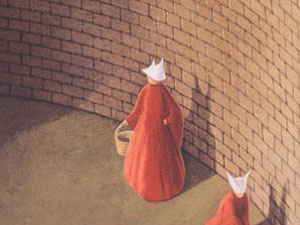
The Handmaid's Tale is considered a work of dystopian fiction, focusing on a near future in which a totalitarian theocracy has overthrown the United States government. Its narrator, known only as Offred, a patronymic meaning "Of Fred," referring to the man she serves, tells her harrowing story of subjugation and the choices she makes in both obedience and defiance to regain some personal power. Offred is a handmaid, a kind of chaste concubine kept in wealthy households for the sole purpose of reproduction in an era of declining births. She has already failed twice, and if she fails a third time, she will be deemed "unwoman" and sent away to a colony to either clean up radioactive waste or perform other hard labor. The novel concludes with a metafictional epilogue which renders the entire work complete.
5. Love Medicine - Louise Erdrich
Louise Erdrich is a celebrated Native American author, and in this work set on and around a North Dakotan reservation, she tells the tale of intertwined families--the Lamartines and the Kashpaws. This novel centers around a group of women who are united by their strength in the face of tumult and also the diversity of their love. It continually juxtaposes individual desire with the pull of blood ties as well as affection for old ways and the enchantment of the new. This novel is a sequence of braided narratives which teem with culture and life.
6. Prodigal Summer - Barbara Kingsolver
This novel is set over the course of one humid summer amid the mountains and farms of southern Appalachia. It follows the story of three protagonists, Deanna, Lusa, and Garrett, alongside an overarching theme of connections, both to one another and also to the flora and fauna with which they share a life. Amazon describes it as "a hymn to wildness that celebrates the prodigal spirit of human nature, and of nature itself."
7. The House of the Spirits - Isabel Allende
The story of this novel details the life of three generations of the Trueba family in Chile, revealing both its jubilation and its sorrows. Allende weaves magical realism throughout the novel, creating touches of ethereality in the narrative. Its story is told mainly through two protagonists, Esteban and Alba. Esteban is the patriarch of the Trueba family. His bravado and political enthusiasm are checked only by the love for his wife Clara, who has been touched by powers such as clairvoyance. Their daughter Blanca's forbidden love infuriates Esteban, but it results in his granddaughter Alba, his greatest joy. Alba's ambition leads the Trueba family into a radical future.
8. A Tree Grows in Brooklyn - Betty Smith
This book is an American classic, a coming of age story which reveals the young, sensitive Francie Nolan in her formative years in the slums of Williamsburg, Brooklyn. It is split into five "books," which cover a different period in in the characters' lives. It opens in 1912 when Francie is just eleven years old. Its story is filled with bittersweetness. It is heartbreaking, uplifting, filled with compassion and cruelty, and raw with honesty. Its themes are universal, although its narrative absolutely captures a unique time and place.
9. Rich in Love - Josephine Humphreys
From Amazon, "At the age of seventeen, Lucille Odom finds herself in the middle of an unexpected domestic crisis. As she helps guide her family through its discontent, Lucille discovers in herself a woman rich in wisdom, rich in humor, and rich in love."
10. The Little Prince - Antoine de Saint-Exupery
This may seem an odd choice for this list, but I believe it is one of the most important pieces. The Little Prince may ostensibly be viewed as a children's book, however, it makes many poignant observations about life and human nature. I believe everyone should read this book at least twice in their lives, once as a child, and once as an adult. Its themes are universal, and the startling profundity of its declarations serves as a much needed grounding for so many adults who forget how to truly appreciate things. The story is that of the narrator whose plane has crashed in the desert. He meets the little prince, who is traveling from planet to planet, finding out more and more about life. The narrator is dying of thirst, but finds a well with the prince's help. The prince warns the narrator not to watch him leave, when he wishes to return to his own planet, as it will make the narrator sad. The prince's exit is a staggering scene full of both conflict and hope.
You may have noticed that a couple of these summaries I completed with a bit of outside help. It's true, I haven't read all of these books yet. I am twenty-two, and I'm still wading through vast pools of literature. I look forward to reading Prodigal Summer, Rich in Love and many more wonderful books in my twenties. I've read books from both authors before, so I'm excited to read more of their work. For those of you who want more from Kingsolver and Erdrich, I'd recommend The Poisonwood Bible and Tracks, respectively.
I feel I should also note that while this list is mainly intended for women, I believe these books would be absolutely appropriate for anyone who wants to read them. Just because a book focuses on women's issues doesn't mean it automatically is irrelevant for men, and vice versa. As to why I selected all novels as opposed to interspersing them with non-fiction, I'll leave you with a quote from William Faulkner. "The best fiction is far more true than any journalism."
Subscribe to:
Posts (Atom)